Hochschule Niederrhein (2007–2012)
Bachelor of Arts (B.A.), Communication Design
Editorial Design, Typography, Copywriting, Media Research, History of Design in Europe
Editorial Project:
“Never Again Must Masada Fall”
Youth and Military Service in Israel (2011)
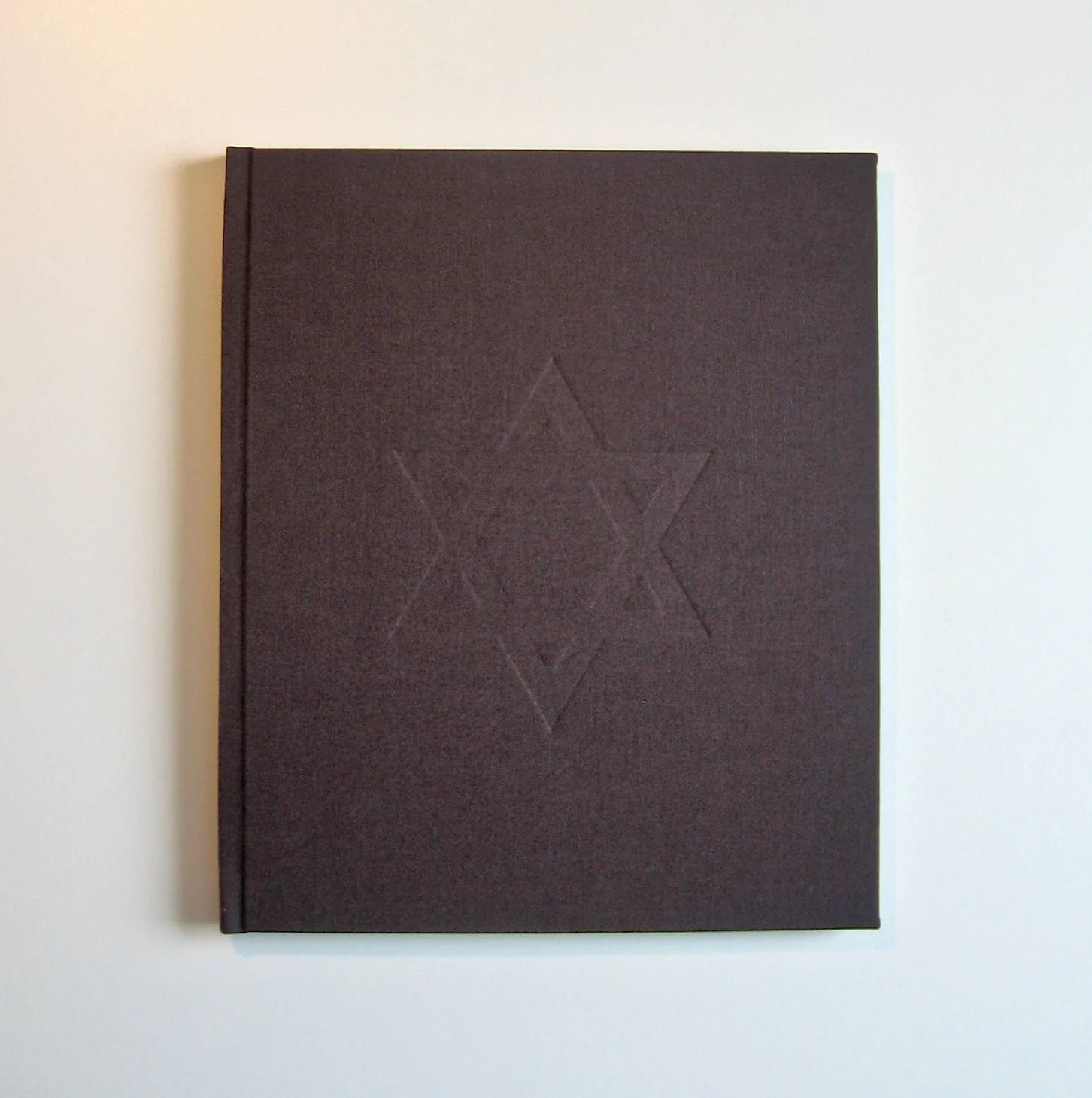
A student publication exploring youth, military service and the space for individual choice in Israel, through editorial design, typography and research.


I created this publication in 2011 while studying Communication Design at Hochschule Niederrhein, under the supervision of Prof. Nora Gummert Hauser. Our professor set a broader assignment: to consider the situation in the Middle East and develop a design response. This article looks back at my response to that task. The publication belongs to that moment; it offers neither a comprehensive account of the Israeli–Palestinian conflict nor a representative picture of Israeli society.

Motivation
At the time, someone close to me had been deployed to Afghanistan. Questions about military service, responsibility, and especially loss and the uncertainty of deployment had become personal. Looking back, I suspect this project was partly a way of working through my own emotions about that. Afghanistan and military service in Israel were different contexts, but that experience prompted questions I brought to the assignment: what happens when military expectations meet a young person’s plans for their own life?
These questions also connected with debates in Germany at that time. Compulsory call-ups were suspended in peacetime on 1 July 2011.1 Alongside the publication, I was exploring how selective news reporting could shape public perceptions of the Bundeswehr, looking at how a controversial video was selected and framed in media coverage.
A friend was also completing her bachelor’s thesis on humanitarian intervention, considering the UN’s failures in Rwanda and Bosnia and the role of NATO. Her argument questioned the UN’s capacity to act and favoured a stronger role for NATO. What stayed with me was the question it raised about responsibility: who is able to act, who decides, and what follows from acting or failing to act?
Against this background, I chose to focus on youth and military service in Israel. The publication’s title, “Never Again Must Masada Fall”, echoes the phrase “Masada shall not fall again”, associated with the ancient fortress and its place in modern Israeli national memory.2

The objective
I wanted to explore how military service could shape a young person’s sense of duty, belonging and individual freedom. The publication brought together accounts of three Israeli young adults describing their lives before, during and after service.3 I read these as three perspectives, shaped by different circumstances. It is not a portrait of an entire society. Their accounts led me to ask how much room there was to follow one’s own path when personal wishes and social expectations pulled in different directions.

Guiding idea
Through the composition, I wanted to make the “formative pressure” I read in these accounts tangible. I understood it as coming both from social expectations around service and refusal, and from the wider context of conflict and perceived threats. The design translated my reading of the material into a visual experience.4
The black areas gave that pressure a physical presence on the page. They shaped and interrupted the space around the text, suggesting conditions through which the protagonists had to find their own way.

Original photo: Nicholas Brautlecht (2008). Original text: L. Bernhardt & N. Brautlecht (2008).

Structure of the publication
I used information from academic papers as well as journalistic field reports. These two types of material divided the publication into two physically separate documents that represented the military and society.
The first part contained the personal narratives of the three protagonists. It formed the human “core” of the publication.

The second part was the “cover”: a large poster presenting information about the structure of the armed forces and military socialisation as described in the sources I used at the time.5 Core and cover were in tension with each other. To reach the personal narratives, the reader first had to remove the surrounding shell.

The publication
A selection of photographs documenting the original publication, from its physical construction and typographic details to selected interior spreads.
Select an image to enlarge it.


Footnotes
Editorial design and physical publication: Paul Pagel, 2011. The photographs shown here document that original work. The text collection includes Lutz Bernhardt’s reporting for Pressenetzwerk für Jugendthemen and Endy Hagen’s essay. Source texts and photographs remain the work of their respective authors and photographers; my design and colour treatment do not transfer those rights. Credits and source details appear in the notes below.
- German Bundestag, 2011: compulsory call-ups were suspended in peacetime from 1 July; conscription was not abolished. Checked for this 2026 retrospective; not documented as a source consulted in 2011.
↩︎ - Israel’s Masada World Heritage nomination dossier (UNESCO-hosted, printed pp. 16–17, 41) describes the phrase and its national-memory framing. This is Israel’s account. Checked for this 2026 retrospective; not documented as consulted in 2011.
↩︎ - Original research source: Lutz Bernhardt, “Nie wieder darf Masada fallen!”, Pressenetzwerk für Jugendthemen, saved in my Citavi collection and accessed on 30 March 2011. It contains accounts of Shachar, Mor Elnekave and Tsoof Yovel; the printed Mor passages closely follow this version, with some rearrangement. Related, differing versions are L. Bernhardt and N. Brautlecht’s “Verteidigung als moralische Pflicht,” taz, 6 June 2008, and Reportagebox.
↩︎ - Editorial composition, typography, black graphic areas, blue lines, colour treatment and physical publication: Paul Pagel. The source texts and photographs are the work of their respective authors and photographers. The prologue and passages on the poster draw on Endy Hagen’s “Ein echter Israeli desertiert nicht: Kriegsdienstverweigerung in Israel.” The Mor portrait matches the Reportagebox photograph credited to Nicholas Brautlecht; individual photographic credits appear in the captions. Some image sources and reproduction rights remain unresolved.
↩︎ - The poster’s “Mira Furman” should read Mirta Furman (1999), cited in Uta Klein, Militär und Männlichkeit in Israel, pp. 3–4. ↩︎
Leave a Reply